





Gold for IRA: IRS-Approved Coins, Bars, Fees & How to Open One (2026)
A Gold IRA makes sense for investors who want 5–15% portfolio exposure to physical bullion as an inflation hedge; gold returned approximately 8.1% annualized over the 20 years ending 2025 vs 7.3% for the S&P 500 (World Gold Council, 2025). It is not suitable as a majority holding because it pays no yield. A gold IRA, formally known as a precious metals IRA or SDIRA, is a self-directed arrangement that lets you hold IRS-approved gold bars, gold coins, and other approved precious metals within an individual retirement account under IRC §408(m)(3). Typical all-in annual cost is $275–$600; metals must be stored at an IRS-approved depository such as Delaware Depository, Brink's Global Services, or IDS of Texas — not at home.
By Richard Palmer, CFP® — 16 years advising clients on self-directed IRAs. Last reviewed April 22, 2026 against IRS Publication 590-A and IRC §408(m)(3). Affiliate disclosure: we earn referral fees from featured companies; rankings are not influenced by commission rate. Nothing here is tax or investment advice — consult a fiduciary before acting.
What Is a Gold IRA?
A gold IRA is a type of self directed individual retirement account designed to own physical metals such as gold bullion, gold bars, gold coins, and certain other metals like silver, platinum, and palladium. Unlike a traditional IRA loaded with paper assets, a precious metals IRA holds physical bullion that is stored in an IRS approved depository. You can open traditional gold IRAs funded with pretax dollars, Roth gold IRAs funded with after tax dollars, or SEP gold IRAs for self employed individuals and small business owners. These accounts follow the same tax advantages and contribution limits as traditional IRAs and Roth IRAs. The key difference is the asset mix: instead of only traditional assets, you hold physical precious metals purchased from reputable gold dealers and safeguarded by a specialized custodian and an IRA trustee in secure storage.

Is Gold a Good Investment for an IRA?
Gold is suitable for 5–15% of a retirement portfolio as an inflation hedge, not as a majority holding. Many investors include gold to diversify beyond the stock market and traditional investments, especially during periods of economic uncertainty. Gold can help moderate volatility in a retirement plan because its price often reacts differently than other assets during market stress. Unlike stocks and bonds, physical gold pays no dividends or interest — its value comes from appreciation and its role as a store of value. Most investors who choose gold for IRA do so to complement—not replace—traditional assets, using a self-directed retirement account (SDIRA) to add approved precious metals alongside bonds, mutual funds, and equities.
How a Self Directed Gold IRA Works
Account Structure and Tax Treatment
Gold IRAs follow the familiar framework of an individual retirement account. With a traditional IRA, contributions may be tax deferred, funded with pretax income, and distributions are generally taxable in retirement. With a Roth IRA, contributions are made with after tax funds and qualified withdrawals can be tax free. Roth gold IRAs apply the same rules—only the underlying assets differ. Traditional gold IRAs and traditional SEP IRAs use pretax dollars; Roth gold IRAs use after tax dollars. A precious metals IRA is simply a separate IRA that holds physical metals under IRS rules while maintaining the same tax benefit structure that applies to traditional and Roth IRAs.
Custodian, Trustee, and Precious Metals Dealer
Because you are holding physical gold in an IRA, you must work with an IRA custodian or gold IRA custodian experienced in self directed accounts. The custodian, often in tandem with an IRA trustee, handles account administration, recordkeeping, IRS reporting, and coordination with an IRS approved depository. You also select a reputable precious metals dealer or gold dealers to source the metal. The specialized custodian and the precious metals dealer are separate roles: the dealer sells you approved precious metals at a price derived from the spot price plus a dealer premium, and the custodian ensures the assets are titled properly to the IRA and shipped to secure storage. Always verify the dealer’s reputation and ensure the metals meet Internal Revenue Service fineness and approval standards.
Funding Methods and Contribution Limits
You can fund a gold IRA through annual contributions (subject to current contribution limits), via transfer from another IRA, or by a rollover from a qualified plan such as a 401(k). Transfers and rollovers are common because they allow you to move existing retirement assets into a self directed IRA without triggering taxes if done correctly. Contribution limits apply across your traditional IRA and Roth IRA balances, so factor those caps into your plan. A financial advisor or your custodian can help confirm the right method, timing, and paperwork to keep the funding tax deferred or tax free as applicable.
Selecting Approved Precious Metals
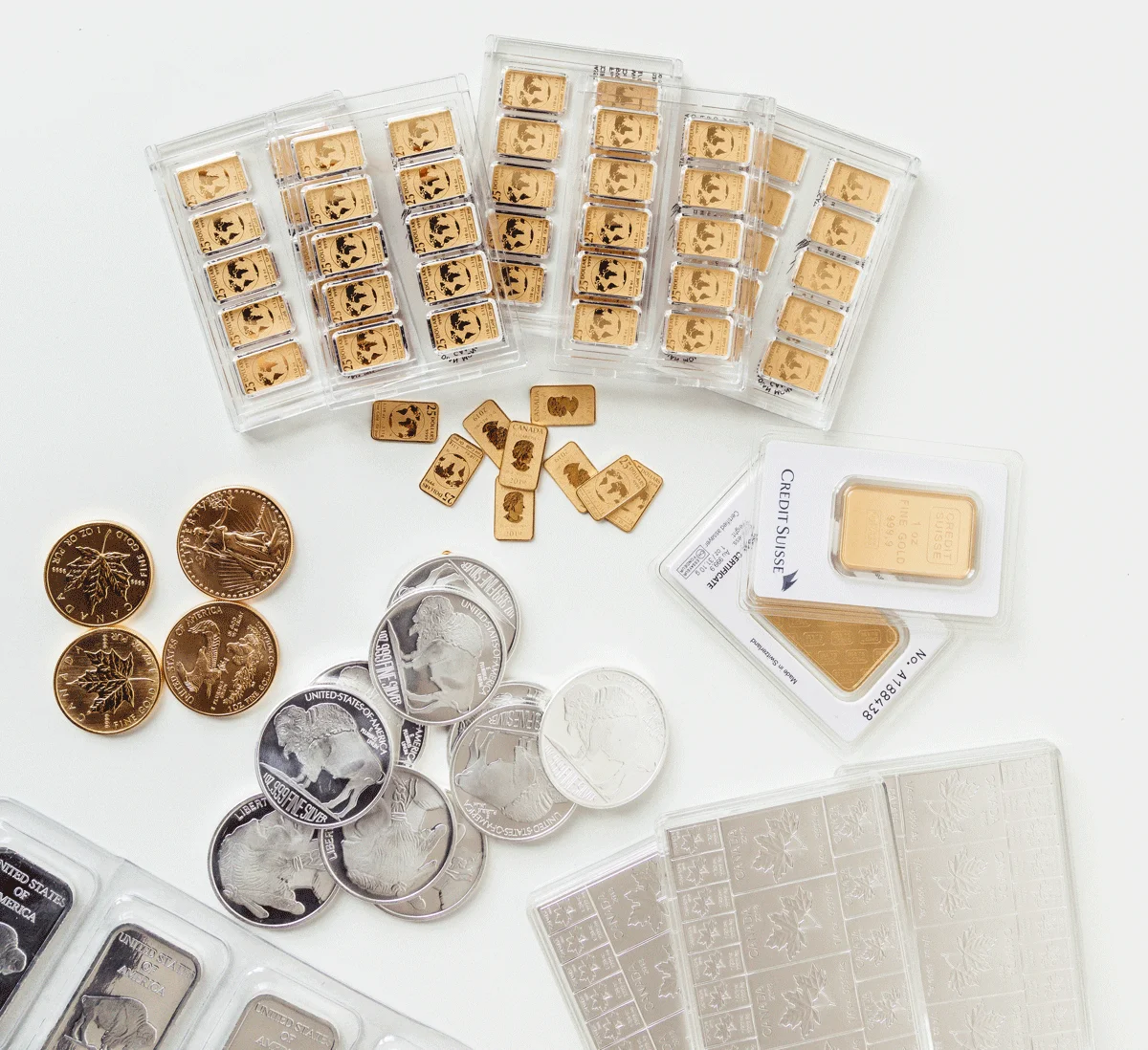
The IRS approves only four metals for a Gold IRA under IRC §408(m)(3): gold (≥0.995 fineness / 0.9999 for most coins), silver (≥0.999), platinum (≥0.9995), and palladium (≥0.9995). Permitted gold products include American Gold Eagle coins (91.67%, explicitly approved), American Buffalo (99.99%), Canadian Maple Leaf (99.99%), Austrian Philharmonic (99.99%), and LBMA-accredited or COMEX-approved bars (≥99.5%). Numismatic and proof coins are generally excluded — only investment-grade bullion qualifies. When you choose to hold gold, ensure the products are on the approved list, have documented purity, and are delivered directly to an IRS-approved depository through your custodian.
Pricing, Spot Price per Ounce, and Premiums
Dealers price IRA gold at spot + a 2–5% premium covering minting, shipping, and dealer margin. The 1 oz gold price (spot price per ounce) is live and fluctuates throughout the day; as of April 2026 gold trades near $2,350/oz. A bid-ask spread (price spread) also applies: the price you pay to buy is higher than the price you receive when selling. Bars often carry lower premiums (1–3%) than bullion coins (2–5%), while American Gold Eagles command a higher premium due to demand and mint assurance. Comparing quotes from multiple gold dealers and understanding the full bid-ask spread helps you manage costs while ensuring you obtain approved precious metals for your SDIRA.
Secure Storage and Custody Requirements
Your IRA custodian must ship every IRA-owned coin or bar directly to an IRS-approved depository; you may never store Gold IRA metal at home or in a personal bank vault. Leading depositories include Delaware Depository (Wilmington, DE), Brink's Global Services, and IDS of Texas — all offer both segregated storage (your metals in a dedicated vault, typically $150–$300/yr) and commingled (allocated) storage (pooled by metal type, often $100/yr flat). Segregated vs commingled storage is a real cost difference worth discussing with your custodian. Storing physical gold through qualified depositories ensures proper insurance, accounting, and chain-of-custody documentation meeting IRS requirements.
Types of Gold and Other Precious Metals You Can Hold
Within a precious metals IRA, you may hold physical bullion in the form of gold bars, gold coins, and certain bullion coins from approved mints. Commonly chosen items include American Gold Eagles, bars from recognized refiners, and other approved coins that meet fineness standards. You can also include other precious metals—silver, platinum, and palladium—provided they are other approved precious metals meeting the Internal Revenue Service fineness thresholds. Investors often refer to these allocations collectively as gold silver and other metals inside a self directed IRA. While the account is sometimes called a gold IRA, it can hold multiple metals. The key is to ensure you are holding physical gold and physical metals that are explicitly allowed, not collectibles. Stick to physical bullion products listed by your custodian and avoid rare coins unless your custodian confirms they qualify (most do not). Holding physical gold inside a self directed retirement account must always comply with IRS rules, including storage at an approved facility and documentation of chain of custody.
Gold IRA Fees: Setup, Custodian, Storage & Spread (2026)
Compared with a typical brokerage IRA, a precious metals IRA involves higher fees. Expect these 2026 fees: account setup $50–$250 one-time, annual custodian fee $75–$300 (custodial fee schedule varies by provider), dealer spread 2–5% over spot price (bid-ask spread), wire transfer fee $25–$50 per transaction, and storage $100–$300/yr (segregated) or $100/yr flat (commingled) at Delaware Depository, Brink's Global Services, or IDS of Texas. Total all-in cost typically runs $275–$600/year. Ask for a complete custodial fee schedule in writing before you open an account. Understanding all line items — setup, annual, storage, and liquidation/buyback program spread — will help you build a realistic long-term investment plan.
Gold IRA Taxes, Contribution Limits & RMDs (2026)
The tax treatment of a gold IRA mirrors that of other IRAs. Traditional SDIRAs are tax-deferred; Roth SDIRAs can be tax-free on qualified withdrawals. Distributions are taxed as ordinary income. The 2026 IRA contribution limit is $7,000/year ($8,000 if age 50+ with catch-up contribution), consistent with standard IRA limits — not per-account, but across all IRAs combined. SEP IRA holders and SIMPLE IRA participants have higher limits. Required minimum distributions (RMDs) begin at age 73 under current law; you may take an in-kind distribution (receive actual coins) rather than liquidating to cash, though your custodian must value the metals at fair market value. UBIT (Unrelated Business Income Tax) can apply if the IRA uses leverage; physical bullion IRAs without debt typically avoid UBIT. ERISA rules govern employer-sponsored plan rollovers into SDIRAs. When rolling over a 401(k), a direct transfer (trustee-to-trustee) is preferred over an indirect rollover — with an indirect rollover you have 60 days to redeposit funds (rollover 60-day rule) or the amount is treated as a taxable distribution. Your custodian files Form 5498 annually to report IRA contributions and fair market value. Always follow IRS Publication 590-A and 590-B for current rules.
Gold for IRA vs. Traditional Investments
A gold IRA is not intended to replace a diversified stock and bond allocation. Instead, many investors use gold to complement traditional assets, seeking diversification benefits in the face of stock market volatility and inflation risk. During certain bear markets or periods of currency weakness, gold has historically acted as a potential stabilizer. However, gold can also experience periods of underperformance. The best practice for most investors is to integrate gold into a broader retirement portfolio that includes traditional investments and other assets, with a percentage allocation that fits your risk tolerance and time frame.
Gold IRA vs Gold ETF (GLD, IAU, SGOL)
A Gold IRA holds physical bars and coins — from LBMA-accredited refiners or approved sovereign mints — in an IRS-approved depository; you hold legal title to the metal. A gold ETF (e.g., SPDR Gold Shares / GLD, iShares Gold Trust / IAU, Aberdeen SGOL) holds a share in a trust that owns gold. Key differences: ETFs charge 0.15–0.40% expense ratios annually and trade like stocks with instant liquidity; Gold IRAs charge $175–$600/yr all-in but give you direct ownership of allocated, physical metal. Gold ETFs inside a standard IRA are simpler and cheaper; a Gold IRA (SDIRA) is better if you specifically want physical bullion ownership and the storage security that entails. Choose a Gold IRA for physical metal ownership; choose a gold ETF for liquidity and low cost.
Gold IRA vs Physical Gold (Home Storage)
A Gold IRA gives tax-deferred (or tax-free) growth on your gold holdings but mandates storage at an IRS-approved depository — home storage is prohibited and triggers a full distribution plus potential 10% early-withdrawal penalty. Direct physical gold ownership allows home storage or personal possession but provides no tax shelter. For retirement savers, the tax advantages of an SDIRA typically outweigh the storage restrictions for long-term holds. For investors who want immediate physical access or are already in retirement, direct ownership may make more sense.

Gold IRA Pros and Cons
Pros: inflation hedge backed by physical metal; tax deferral (traditional) or tax-free growth (Roth); protection against currency debasement; portfolio diversification uncorrelated with equities; physical ownership with full title to LBMA-standard bars or coins. Cons: higher annual fees ($175–$600) vs a standard brokerage IRA; no yield (no dividends, no interest); illiquidity — selling requires custodian coordination and may take days; storage restrictions prohibit home possession; dealer spread (2–5% bid-ask spread) erodes returns on short holds; RMDs at age 73 require valuation of physical metal. Best suited for long-horizon investors allocating 5–15% of a retirement portfolio.
Gold IRA Minimum Investment & Top Company Comparisons
Minimums vary significantly: Augusta Precious Metals ($50,000), Goldco ($25,000), American Hartford Gold ($10,000), Birch Gold Group ($10,000), Noble Gold ($2,000). Note: Fidelity, Vanguard, and Schwab do not offer physical Gold IRAs — they offer gold ETFs and mutual funds only. If you want a physical SDIRA, you must use a specialized self-directed IRA custodian.
Liquidation, Buyback Programs & Exit Planning
To liquidate, instruct your custodian to sell holdings back to a precious metals dealer — most top companies offer a buyback program at near-spot prices, though a liquidation spread (bid-ask spread) applies. In-kind distributions (receiving the physical coins) are also possible, though the fair market value is taxable as ordinary income in a traditional IRA. Ask about buyback program terms, the liquidation price spread, and timeline before you open an account. Having an exit plan helps you manage RMDs and changing income needs efficiently.
Practical Investment Strategies
When adding gold for IRA, consider setting a strategic allocation—often a single digit or low double digit percentage of your retirement savings—based on your goals and risk profile. Rebalance periodically to maintain your target weighting as the spot price of gold moves. You can focus on gold bars for lower premiums or gold coins for greater liquidity and recognition. Some investors add a small allocation to other precious metals such as silver or platinum for additional diversification within a self directed IRA. Keep an eye on fees, choose transparent gold dealers, and ensure all purchases meet approved precious metals criteria. Align your strategy with your financial advisor’s guidance, your overall retirement plan, and your time horizon.
The Step-by-Step Investment Process
1. Decide on Account Type
Choose between a traditional IRA, a Roth IRA, or a SEP IRA structure for your precious metals IRA. If you expect a higher tax bracket later, Roth gold IRAs may be attractive for tax free qualified distributions. If you prefer a current year deduction, a traditional gold IRA may suit you. SEP gold IRAs can be useful for self employed individuals who want higher contribution limits than a standard IRA.
2. Choose a Self Directed Custodian
Open a self directed IRA with a specialized custodian who supports precious metals. Confirm they coordinate with an IRS approved depository, offer clear storage options, and provide transparent storage fees and administration charges.
3. Fund the Account
Contribute within contribution limits, transfer from another IRA, or initiate a rollover from a qualified employer plan. Properly executed transfers and rollovers preserve tax deferred or tax free status. Use pretax dollars for traditional accounts and after tax dollars for Roth accounts as appropriate.
4. Select Metals and Place the Order
Pick approved precious metals—gold bars, bullion coins, and specific gold coins like American Gold Eagles. Verify the fineness and approval status. Compare multiple gold dealers on pricing and shipping to the depository. Your custodian handles payment and title so the IRA—not you personally—owns the physical gold.
5. Arrange Secure Storage
The metals are shipped to an IRS approved depository for secure storage. The depository provides documentation, insurance, and audits. You receive account statements from your custodian showing quantities and serial numbers where applicable.
6. Monitor, Rebalance, and Document
Review your retirement accounts periodically, consider the spot price environment, and rebalance as needed. Keep copies of invoices and confirmations from the precious metals dealer and statements from the custodian. Maintain compliance with IRS rules at all times to protect your account’s tax advantages.
Security, Storage, and Title
Security is central when you hold gold for IRA. Storing physical gold at an IRS approved depository provides secure storage, insurance, and audit trails. The depository may offer segregated or non segregated storage; discuss these options, as segregated storage typically costs more. While bank vaults are familiar to many investors, personal safe deposit boxes do not satisfy the Internal Revenue Service requirements for IRA owned metals. The IRA—through the custodian and trustee—must control the assets. If any step breaks the chain of custody, you risk disqualifying the account and losing the tax benefit.
Common Pitfalls to Avoid
Avoid buying non approved metals or collectible rare coins for an IRA, as they may violate IRS rules. Do not attempt to store IRA metals at home. Beware of aggressive pitches that overpromise returns or urge you to liquidate diversified retirement assets to go all in on gold. Monitor higher fees and ask for written schedules of all costs. Compare multiple gold dealers and custodians. Finally, do not overlook rebalancing—holding physical gold without integration into your broader retirement plan can lead to unintentional concentration risk.
Who Might Consider a Gold IRA?
Investors who want diversification, a potential inflation hedge, and a tangible asset inside a self directed retirement account often consider gold. Those worried about economic uncertainty or currency risk may find comfort in holding physical metals. Self employed individuals can explore SEP gold IRAs for higher contribution flexibility. Investors with larger portfolios who want a separate IRA dedicated to precious metals sometimes create a distinct account for administrative clarity. As with any investment, consult a financial advisor who understands retirement accounts, the Internal Revenue Service framework, and how precious metals align with your goals.
How to Evaluate Dealers, Custodians, and Depositories
When selecting partners for a gold IRA, look for a precious metals dealer with robust market experience, competitive pricing, and clear disclosure of premiums over the spot price. The IRA custodian should specialize in self directed accounts, provide strong client support, and work with multiple IRS approved depository options. Ask each party about insurance, audit frequency, shipping procedures, and how they handle client metals during market stress. Reputable gold dealers and custodians help you hold gold and other precious metals compliantly and efficiently.
Gold for IRA in a Broader Retirement Strategy
Integrating gold with traditional investments in your retirement portfolio can improve diversification and may reduce overall volatility. The exact allocation depends on your risk tolerance, time horizon, and income needs. A modest allocation to physical gold complemented by other assets can offer resilience against inflation and market shocks. Use a disciplined approach with defined targets, periodic rebalancing, and careful attention to costs. Whether you favor bars for efficiency or coins for flexibility, the goal is to blend gold with your other assets to support long term retirement savings.
Rollover and Transfer Considerations
If you are moving money from an existing IRA or employer plan, a direct transfer (trustee-to-trustee) is strongly preferred over an indirect rollover. With an indirect rollover, the 60-day rollover rule requires you to redeposit the full amount within 60 days or the IRS treats it as a taxable distribution (plus 10% early-withdrawal penalty if under 59½). Your custodian files Form 5498 after a rollover to document the transaction. ERISA protections may apply when rolling over employer-sponsored plans. Your custodian and financial advisor can help you plan the sequence: open the SDIRA, select the depository, fund via direct transfer, choose approved precious metals, and schedule the purchase. This keeps the investment process orderly and compliant with IRS Publication 590-A.
Regulatory and Risk Notes
All investments carry risk, including gold. The price of gold can fall, and premiums can expand or contract. It is essential to diversify and avoid overconcentration in any single asset class. Comply with IRS rules, maintain secure storage, and use qualified providers. Understand that the Commodity Futures Trading Commission oversees futures and derivatives markets; if you consider futures or options tied to gold, ensure you work with regulated entities and understand the risk profile. For a physical precious metals IRA, stick to approved products, documented custody, and clear audit trails.

🏆 Special Offer from Augusta Precious Metals
Augusta Precious Metals is America's #1 rated Gold IRA company. Get your FREE Gold IRA Kit today — no obligation, ships within 24-48 hours.
Request Your Free Gold IRA Kit →✓ No obligation ✓ 100% Free ✓ Ships in 24-48h
Frequently Asked Questions
Is gold a good investment for an IRA?
Gold can be a useful addition to an IRA for diversification and as a potential hedge against inflation and economic uncertainty. It typically behaves differently than the stock market and some traditional assets, which can help lower overall portfolio volatility. However, gold generates no income, involves storage fees, and can be more expensive to hold than paper assets. For many investors, a modest allocation within a self directed IRA works best, combined with a diversified mix of other assets. Align the decision with your risk tolerance, time horizon, and guidance from a financial advisor.
Is gold eligible for IRA?
Yes. Gold is eligible for an IRA when it is in the form of approved precious metals that meet Internal Revenue Service fineness standards and is held in an IRS approved depository. Eligible forms generally include certain gold bars and bullion coins such as American Gold Eagles. The metals must be owned by the IRA through an IRA custodian or trustee; personal possession is not permitted for IRA assets. Rare coins and collectibles typically do not qualify.
What if I invested $1,000 in gold 10 years ago?
$1,000 invested in gold in April 2016 (spot price near $1,245/oz) would have purchased approximately 0.80 oz before premiums. At approximately $2,350/oz in April 2026, that holding would be worth roughly $1,887 — a 6.6% CAGR over 10 years, before storage fees and bid-ask spread. Past performance does not guarantee future results.
How much will $10,000 buy in gold?
The quantity depends on the spot price and the product premium. For example, at a spot price of $2,100 per ounce, $10,000 would buy approximately 4.76 ounces of gold before premiums and fees. If you purchase gold bars with a 1% to 3% premium, you might acquire roughly 4.62 to 4.71 ounces after premiums. If you choose bullion coins like American Gold Eagles with, say, a 3% to 8% premium, the ounces acquired may be slightly lower. Always compare quotes from multiple gold dealers and factor in shipping, insurance, and custodian storage fees when transacting within a gold IRA.
Final Notes
Gold for IRA can be a powerful way to diversify retirement accounts with physical gold and other precious metals. Using a self directed IRA structure, an experienced IRA custodian, and an IRS approved depository, you can hold gold bullion, gold bars, and gold coins in compliance with IRS rules while maintaining the same tax advantages available to traditional and Roth accounts. Before you move forward, define your investment strategies, confirm contribution limits, compare storage fees and dealer premiums, and coordinate with a financial advisor. With a thoughtful plan and reputable partners, holding physical gold in an IRA can support a resilient retirement portfolio built for the long term.